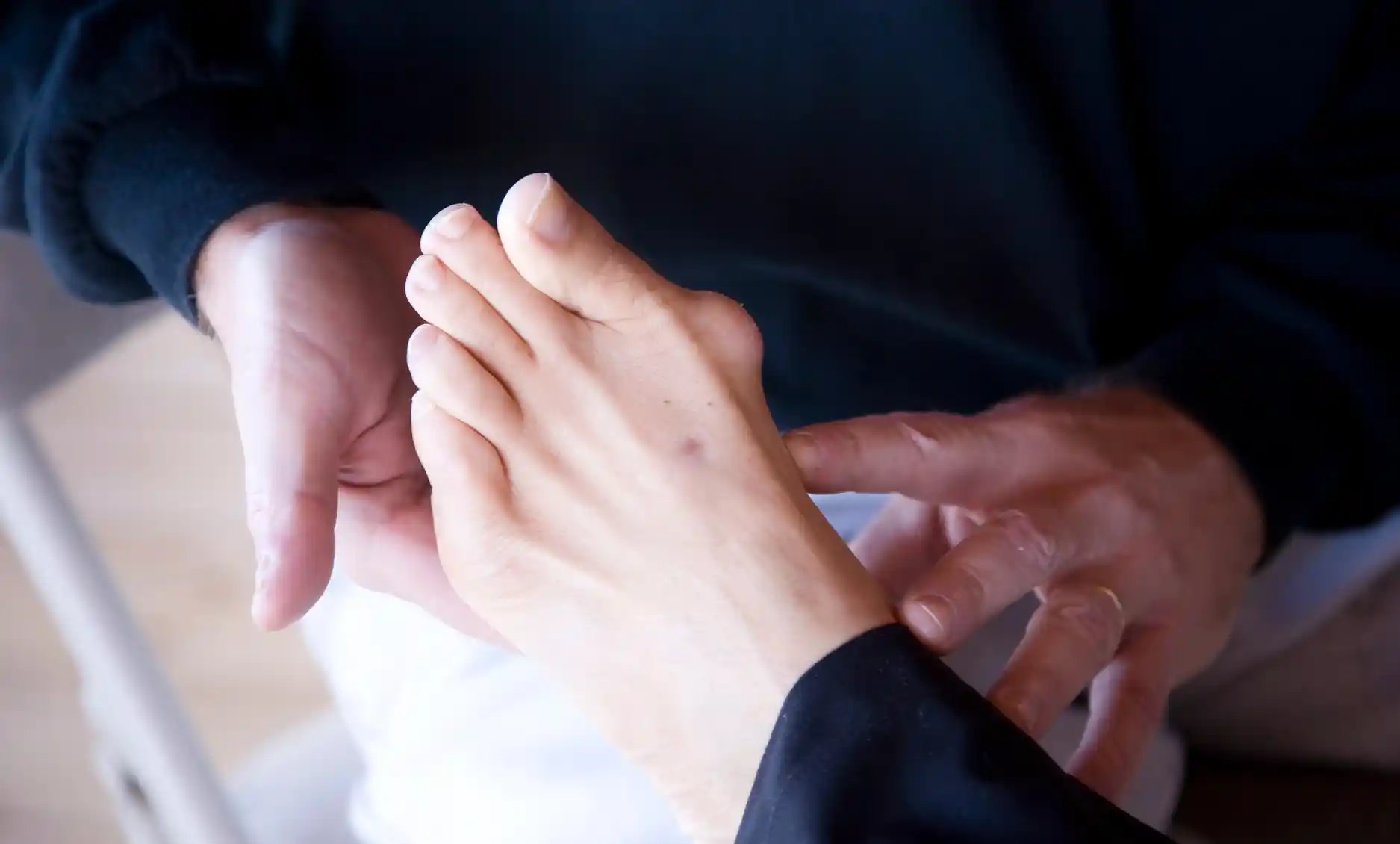
Bunion & Bunionette Surgery
Understanding Minimally Invasive Bunion Surgery
Bunionplasty is a surgical procedure that straightens the misaligned great toe and metatarsal that cause the bunion condition. Surgery is often avoided by many individuals suffering from foot pain caused by bunions due to the fear of:
- Enduring a slow and painful recovery process with a cast, crutches, scooter, or wheelchair.
- The potential for unsightly scarring from extensive incisions
- Facing extended periods away from work and recreational activities
- Being unable to fulfill personal responsibilities and self-care needs, and being very dependent on others for help.
That is why our foot and ankle surgeons are a very select group, utilizing a minimally invasive bunion surgery (MIBS) technique now used worldwide. Featuring superior stabilization, faster healing, immediate weight-bearing in a surgical sandal, and minimal post-operative pain or scarring, these advanced procedures deliver exceptional results that outperform all previously available traditional or minimally invasive bunion surgeries
What to Expect Before, During, and After Surgery
Before Surgery
Before the surgery, you will have a detailed discussion with your surgeon about the procedure. This discussion is critical to ensuring a mutual understanding of the surgery, expectations, and potential risks. Before surgery, you will also be given instructions on your surgical preparation and your expected recovery.
During Surgery
On the day of the surgery, you’ll be admitted to the facility, and an anesthesiologist will administer anesthesia to make you comfortable during the operation.
After Surgery
Post-surgery, you might experience some pain, which is normal and can be managed using prescribed pain relievers. Your surgeon will brief you on essential indicators of possible complications, such as persistent pain, redness, pus formation, or fever. Follow-up visits are crucial on this journey, as they allow the surgeon to track your progress, address any issues, and guide you toward recovery.
Bunion Surgery Recovery
Recovery from bunionectomy surgery can be broken down into distinct phases, each with its own timeline and set of expectations.
Immediate Post-Operative Phase (Days 0-2)
The initial days after surgery are critical for pain management and the prevention of complications. The patient will experience swelling and discomfort during this phase. Important points to note include:
-
Pain Management: Pain is generally managed by anti-inflammatories and non-narcotic pain medication. If needed, prescription medication is provided, but is typically not used for more than a day or two. The patient should take pain medications as instructed to maintain a tolerable level of pain.
-
Rest and Elevation: Elevating the foot helps reduce swelling, and patients are advised to rest as much as possible during this period.
Early Recovery Phase (Weeks 1-2)
Some patients may experience pain improvement, while some swelling may persist during the first two weeks following surgery.
-
Follow-up: A follow-up visit with the surgeon is usually scheduled within 1 to 2 weeks after surgery to check the foot.
-
Weight Bearing: Patients are encouraged to begin walking with the healing sandal unassisted. The vast majority of patients return to all of their daily activities by the end of this phase.
-
Introduction to Physical Therapy: Gentle range-of-motion exercises are commonly recommended at this phase.
Intermediate Recovery Phase (Weeks 3-6)
As healing progresses, patients will resume walking more, and some will resume their daily short walks in their healing shoes. Swelling will persist in this phase, but patients can continue elevating their foot and icing occasionally to reduce swelling.
Advanced Recovery Phase (Weeks 6-12)
By six weeks post-surgery, patients are encouraged to transition to stable athletic shoes and resume recreational activities as tolerated.
-
Transitioning Footwear: Patients are transitioning back into regular shoes, although wider footwear is recommended to accommodate any residual swelling.
-
Increased Activity Levels: Light activities can generally be resumed, but patients should still avoid high-impact activities until cleared by their surgeon.
Complete Recovery Phase (3-6 Months)
Complete healing following Bunionplasty surgery may take many months. Most patients are allowed to return to normal daily and recreational activities within three months. However, the actual recovery period can be upwards of six months, depending on the case

Are You a Candidate for Minimally Invasive Bunion Surgery?
You may be a candidate for bunion or bunionette surgery if:
- Your foot pain affects daily activities, walking, or shoe wear
- You experience persistent swelling or inflammation around the big toe or fifth toe joint
- Conservative treatments (padding, orthotics, footwear changes, injections) no longer provide relief
- Your bunion or bunionette is worsening in size or causing the toes to shift
- You struggle to find footwear that fits comfortably
- You have difficulty participating in sports or activities you enjoy
- The deformity is causing pressure sores, calluses, or nerve irritation
- A specialist has recommended surgical correction for long-term relief
See if Bunion Removal Surgery is Right For You
Leaving bunions untreated only allows them to worsen over time. The progressive foot deformity eventually makes walking unbearable due to swelling, stiffness, and pressure on delicate nerve endings, causing more serious complications, such as:
- Severe bursitis (inflammation of the fluid-filled sac cushioning the bunion)
- Hammertoe deformity of the second toe
- Extreme pain making it difficult to wear shoes
- Metatarsalgia and callus formation from abnormal weight shifting
- Development of arthritis within the misaligned joint and possible toe dislocation
But you can prevent all these painful problems by seeking professional treatment while the bunion is still mild. Our Foot & Ankle experts offer a range of solutions to address bunion deformity at any stage.
Don’t wait until your bunions are bone-deep.