Bunions (Hallux Valgus)

FACA - Bunions

What is a Bunion?

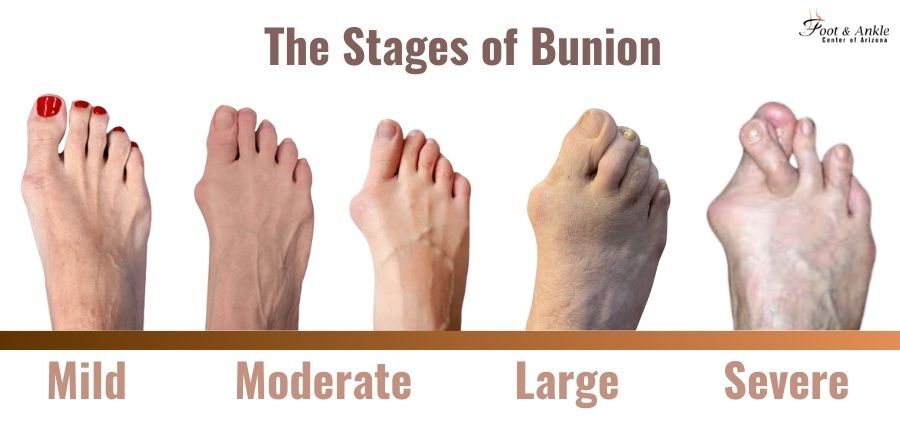
A bunion, or “hallux valgus,” is a bony prominence on the side of the big toe joint. It often occurs due to genetic factors and is exacerbated by wearing improper shoes. In advanced stages, the big toe leans towards the second toe, and occasionally, the second toe overlaps the big toe. 

A bunion occurs when the bones supporting the big toe move away from the middle of the foot, and the big toe leans toward the other toes. Standard shoes are not designed to accommodate a bunion; therefore, bunions often rub against the inside of shoes, often causing inflammation and pain.

Not all bunions are painful, and some may be present without causing significant discomfort. The movement of the big toe can also cause pressure on the second toe, which can become deformed, creating a hammer toe. Occasionally, the second toe may cross over the big toe, creating significant difficulties with dress shoes.


Common Causes of Bunions

Bunions are commonly inherited and tend to run in families, as most people with bunions have a family member with the same condition. Approximately 1/3rd of the population will develop a bunion at some stage.

Tight footwear likely contributes to the development of bunions in people who are already genetically at risk. This is why the condition is more common in women than in men. Other common causes of hallux valgus include injury, arthritis, and muscle imbalance.

Signs You May Have a Bunion

You may have a bunion if:

  • You notice a visible bump or swelling along the inside of your big toe joint.
  • Your big toe angles toward your second toe, sometimes overlapping it.
  • You experience pain, tenderness, or redness around the base of your big toe, especially when wearing shoes.
  • The skin over your toe joint becomes thickened or callused.
  • You have stiffness or limited movement in your big toe.
  • You find it difficult to wear certain shoes comfortably or walk without discomfort.
  • You develop corns, calluses, or irritation between your toes due to toe crowding.

How We Diagnose Hallux Valgus

Our diagnostic process begins with a thorough clinical evaluation. Your surgeon will review your medical history, assess your foot alignment, and carefully examine the structure of your big toe joint. To confirm the diagnosis and understand the severity of the deformity, weight-bearing X-rays are typically taken. These detailed images allow us to evaluate joint angles, bone alignment, and any associated arthritis or soft tissue changes.

Our goal is to identify the root cause of your bunion—not just the visible bump—so we can develop a personalized treatment plan that restores comfort, function, and long-term foot health.


Bunion Correction Surgery: Bunionectomy vs. Bunionplasty

A bunionectomy refers broadly to the surgical removal of the bony prominence at the base of the big toe. It can involve shaving or removing part of the bone and realigning the surrounding tissues to reduce pain and deformity.

A bunionplasty, on the other hand, is a more advanced and cosmetic reconstructive procedure that addresses not only the bone and joint alignment but also restores the natural shape and contour of the toe and foot. Modern minimally invasive bunionplasty techniques, such as those performed at the Foot & Ankle Center of Arizona, focus on precise correction with smaller incisions, faster recovery, and minimal scarring.

Take the First Step Toward Lasting Relief from Bunion Pain

If you’re experiencing bunion pain, we’re here to help. Our board-certified foot and ankle surgeons provide the finest bunion treatment and the highest treatment outcomes in the nation. Plus, our Foot & Ankle Surgeon Kris DiNucci, with 25 years of experience, earned recognition as a “Top Doc’ in Phoenix magazine for 17 consecutive years.

The-Stages-of-BunionConditions

Frequently Asked Questions